
Teenage Sex and Death at Camp Miasma
Edwin Arnaudin: Many viewers — yourself included — were beguiled by writer/director Jane Schoenbrun’s 2024 drama I Saw the TV Glow, as well as her 2021 feature directorial debut, We're All Going to the World's Fair. What about their work resonates with you and what kind of expectations did it set for their new film, Teenage Sex and Death at Camp Miasma?
Josh McCormack: One of the things I've loved about Schoenbrun since discovering their work is their willingness to portray the transformative nature that films, television, and the internet can have on the viewer. While these themes of transformation are clearly inspired by Schoenbrun's experience as a trans person, I don't think they get enough credit for the universality of their films. As someone who shaped so much of their identity through pop culture artifacts and whose anxieties can often be based around the cruel passage of time or yearning to find ways in which to express their passions, Schoenbrun feels like something of a kindred spirit. Not to mention, they clearly love the horror genre as I do.
With Camp Miasma, my expectations were certainly high (particularly after I Saw the TV Glow, one of my favorite films of the past decade), but early word had me prepped for something different from their previous work. And I'm glad that I was prepped, because it's definitely worth noting that — despite sharing similar themes — Camp Miasma is a much different beast from Schoenbrun's prior films, particularly on a tonal level.
Edwin: It’s certainly much lighter, funnier, and more playful than TV Glow — one of the bleakest films in recent mainstream indie cinema and one whose conflicts and emotions I found to be far more esoteric than universal (big word!), despite its impressive homages to '90s pop culture.
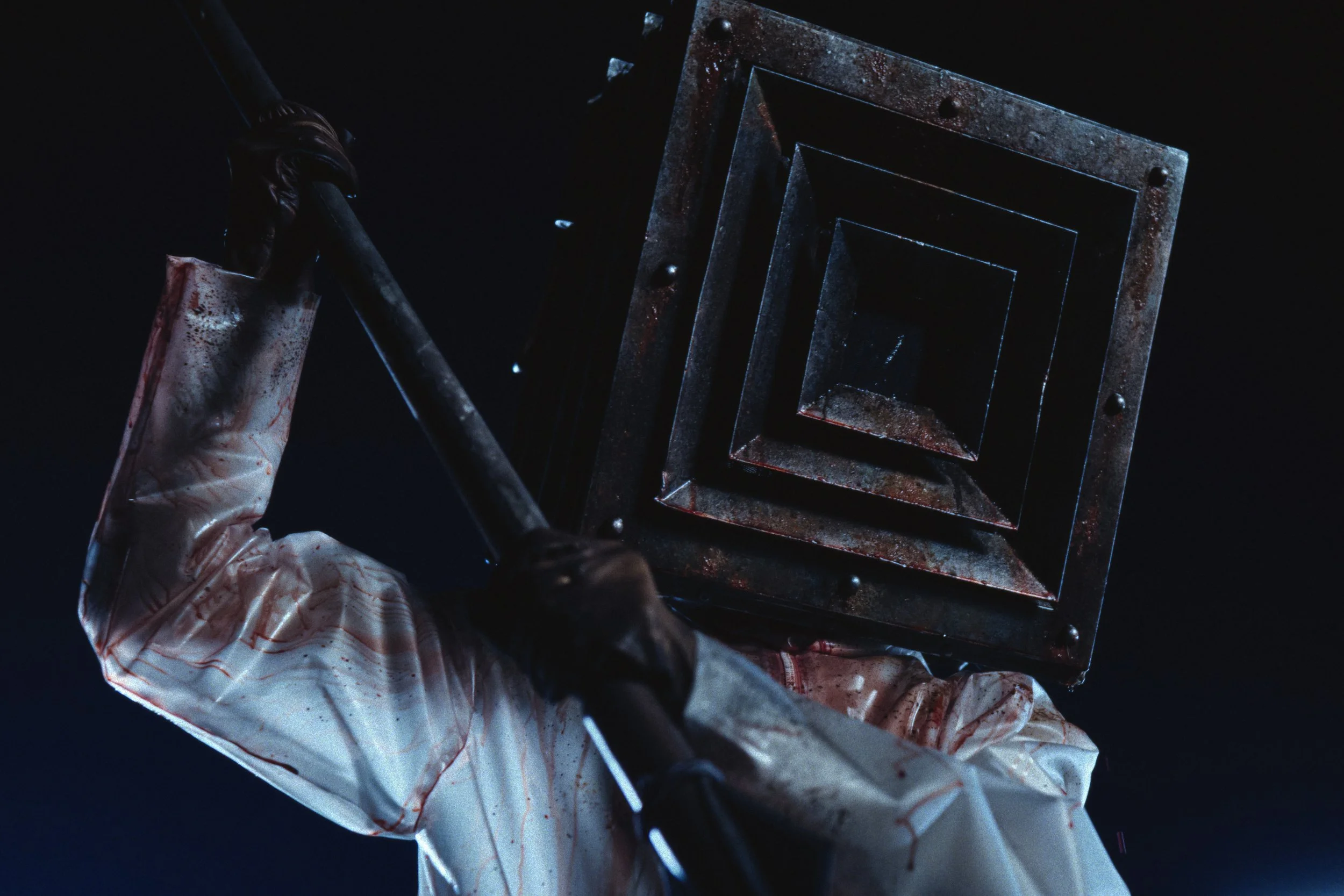
Indeed, while Schoenbrun’s follow-up centers on Sundance darling Kris Williams (Hannah Einbinder, Hacks), her pre-production work on a reboot of the Camp Miasma series, and the history surrounding these Friday the 13th-like movies, I wouldn’t call it a horror film. Sure, there’s plenty of bloodshed, but with a few notable exceptions, it’s pretty much all carried out in a humorous manner.
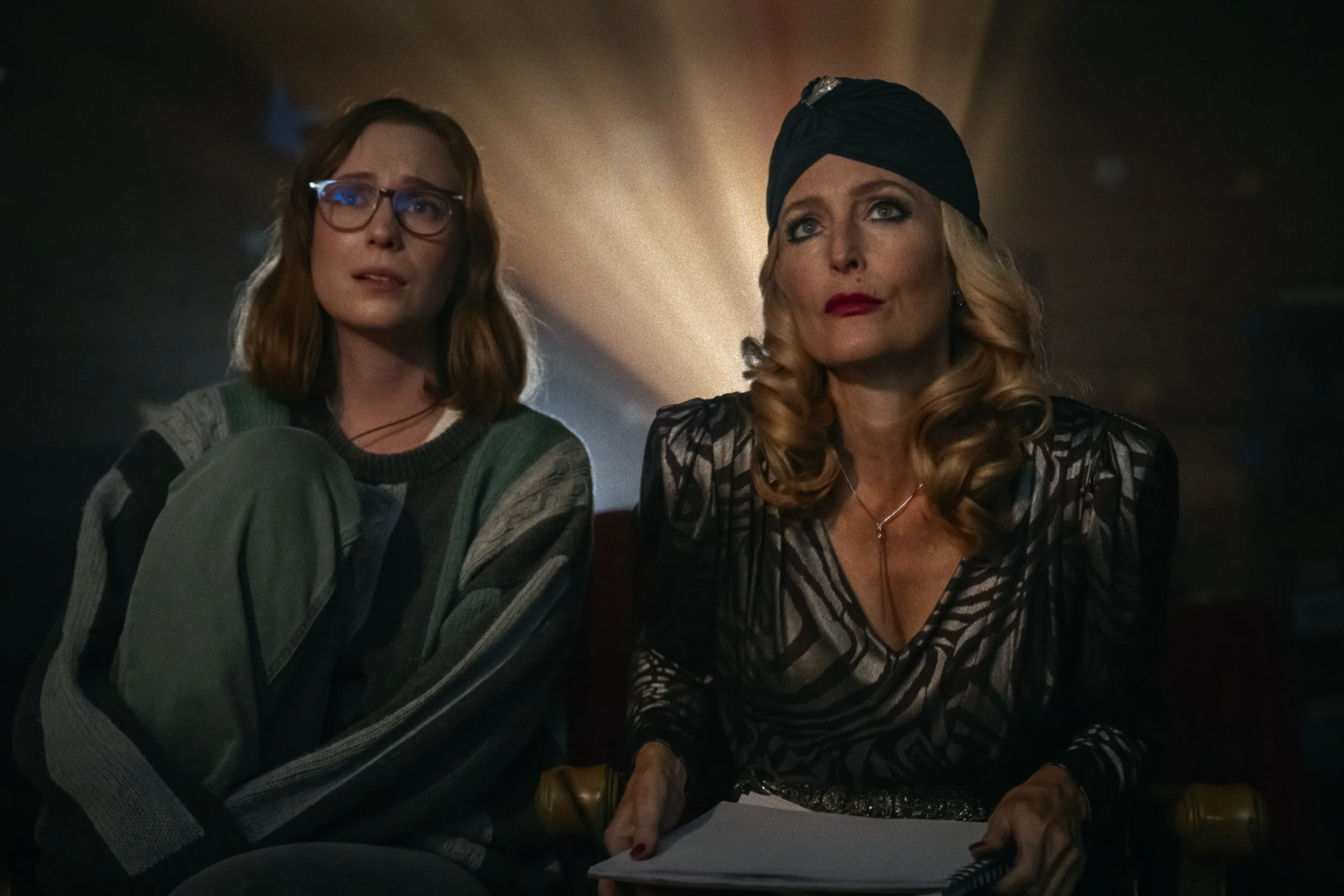
Despite the breezier tone, I initially had a lot of the same problems with it that hampered my engagement with TV Glow. Again, Schoenbrun seems primarily focused on homage via production design and period appropriate footage within the film without complementing it with a compelling narrative. And her middling dialogue and spotty character development as Kris visits original Camp Miasma final girl Billy Presley (Gillian Anderson), who lives on the property where the series’ installments were filmed, had me ready to shout, “The emperor has no clothes!” at the screen.
But then, starting around the halfway mark, events take place that gradually drew me in, prompting a revised exclamation of, “OK, so, there are some nice garments here!" Were you rapt from the get-go, or was there a turning point that won you over?
Josh: To be honest, it took me a bit longer to settle into Camp Miasma than it did Schoenbrun's previous work. That wasn't really due to the lighter tone, but rather the surprisingly hackneyed dialogue exchange Kris has with her agent (SNL's Sarah Sherman) regarding modern horror franchises in one of the early scenes. In fact, if there's one aspect of the film that didn't quite land for me, it was some of the script's showbiz commentary which felt more in line with a lesser Scream sequel than what I've come to expect from Schoenbrun.
Once Anderson's Billy enters the picture, however, I was fully on board. I found her and Einbinder's chemistry so lovely from the get-go and the way in which Billy dismisses yet another reference-laden diatribe from Kris by getting her to express herself less analytically and more emotionally put my initial worries of the film being merely a franchise satire to rest.
I also have to disagree with your criticism of the dialogue and character development in these early sequences. While I praised the universality of Schoenbrun's themes in their early work, I can't deny that their stilted dialogue can often put general audiences at a distance. Here, however, I found Kris and Billy's sapphic exchanges were bolstered by some genuinely funny asides (particularly from Anderson) and a welcome sense of eroticism.
One of the early criticisms I heard of the film was that it works more as a piece of film analysis than a successful film in its own right. While I don't deny that the film is incorporating certain elements of feminist or queer theory and their relationship to slasher movies, I think it weaves these ideas into what is ultimately a celebration of the genre. It even features one of the most absurdly fun serial killer set pieces I've ever seen. Did you think it worked as a piece of entertainment or was it too academic for its own good?
Edwin: The film overall borders on being overly academic. As with TV Glow, Schoenbrun overdoes it on exposition and adds in some clunky film nerd asides. Would Kris really utter “Split diopter” about a shot she’s seen numerous times? It’s one of many heavy-handed winks at the audience that made the opening half a challenging sit.
But then The Sequence to which you referred plays out and, holy shit, I doubt we’ll see a better one all year. Set to Counting Crows’ “A Long December” (one of my favorite songs), the gory, action-packed stretch is a stunning, sustained stretch of filmmaking that elevates Camp Miasma to epic heights. And while the film struggles to maintain that momentum, and is nearly derailed by an especially cringey example of the movie industry critiques you mentioned, its brilliant climactic combination of self-realization through extreme fantasy charmed me — to the extent that I’m curious to see how the first half plays knowing where it’s ultimately going.
Josh: It's a testament to how much I enjoyed Camp Miasma that The Sequence — which would be the best scene in almost any other film — wasn't even the high point of the film for me. That honor does indeed go to the fantastical climax (heh), which not only serves as a satisfying culmination for Kris' arc but also works as a showcase for Schoenbrun's deft handling of disparate tones. It's also where Eindbinder really gets to shine, with her performance oscillating between frightened and titillated from moment to moment.
I also want to point out this being an example of just how different you and I are as audience members, Edwin, because when Kris uttered "Split diopter" while watching a movie she had already seen, it was one of the most relatable moments I've witnessed in modern cinema. (Which isn't something I'm particularly proud of, to be clear.)
Edwin: Well, Schoenbrun “got” me during The Sequence with their employment of my beloved Snorricam (but I simply celebrated internally because not everything needs to be said aloud — not judging anyone, including yourself, of course; but maybe folks should just watch more Brian De Palma films and bask in their glory).
You rightfully praised Eindbinder’s performance during the orgas…um…home stretch, but we haven’t sufficiently celebrated just how rock-solid Anderson is throughout her time onscreen. Sure, the KFC stuff goes on far too long and various other head-scratching elements of Billy’s day-to-day life muddy the narrative, but the once and future Dana Scully lends the film a majestic presence that few actors can manifest.
It almost feels wrong to grade Camp Miasma based on a single viewing (and via a screening link on my glowing TV), but I was enchanted enough to secure tickets for a big-screen revisit this Thursday night, so I may come back and add an editor’s note regarding new findings. For now, it gets a solid B-plus from me.
Josh: I definitely think it's a film that will be rewarding on a rewatch. And you are right to celebrate Anderson, who not only delivers a great performance but is also perfectly cast as a romantic interest for a horror genre fanatic, given her status as a sex symbol for countless X-Files fans of Schoenbrun's generation.
Having affinity not only for Schoenbrun's work but also the Friday the 13th franchise, it's almost no surprise that I loved Camp Miasma as much as I did. And yet, it still managed to surprise me thanks to its jovial tone and a tender love story at its heart. As someone who saw a screening of We're All Going to the World's Fair in 2022 with approximately four other people in the theater, it's been fun to see Schoenbrun grow an audience over the course of their two follow-ups. While I certainly wouldn't say Camp Miasma is a mainstream film, the audience I saw it with responded to the film with lots of laughs and even burst into applause as it cut to the closing credits. Based on their prior work, I didn't think Schoenbrun was a director who would want to make something more akin to a crowd-pleaser. But with Camp Miasma, that's exactly what they've done, and they've accomplished it without sacrificing their unique authorial voice.
Even with some minor nitpicks, it ranks right up there with Nolan's The Odyssey as one of my favorites of the year so far. I'm giving it an A-minus.
Grade: A-minus. Rated R. Now playing at Carolina Cinemark, the Fine Arts Theatre, and Regal Biltmore Grande.
(Photo: MUBI)