
Nimrods
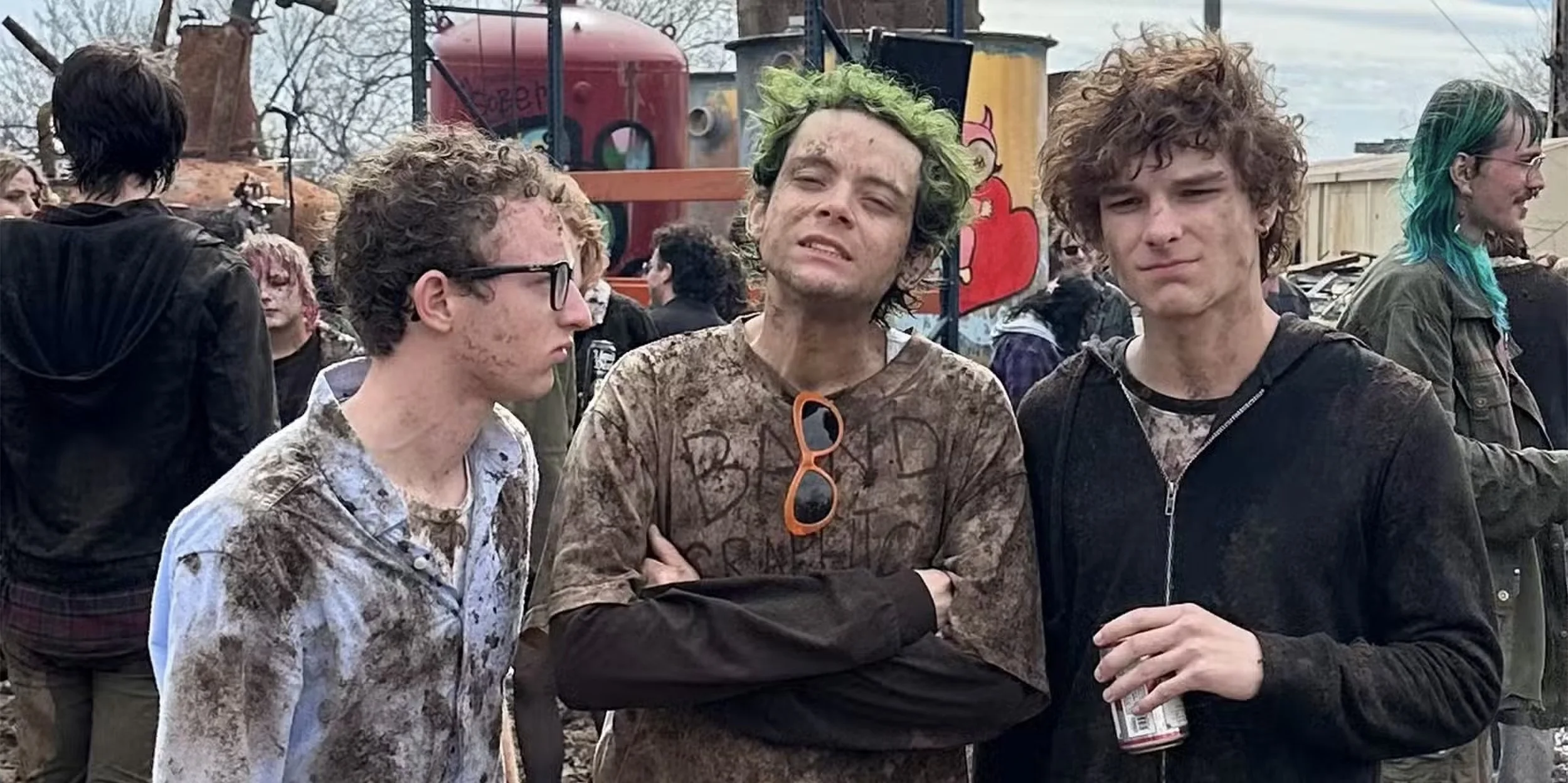
Bruce Steele: The movie Nimrods is many things besides being, at heart, a teen comedy. Mostly, it’s a road movie, about three high schoolers from Kansas City who have a punk band called Analog Dogs and have just a few days to get to Los Angeles, where they believe they’re the opening act for Green Day’s New Year’s Eve concert. Obviously, it’s also a rock ‘n’ roll movie, with plenty of live performances by the Dogs, Green Day, and others. Less apparently, the film also reportedly taps into Green Day’s own early touring anecdotes for some of the scenes along the way. Weirdly, it seems to be only the second narrative feature produced by Live Nation Studios — the filmmaking division of the concert promotion monopoly — after the acclaimed Bradley Cooper/Lady Gaga remake of A Star Is Born (2018). Finally, it’s a reunion of writer-director Lee Kirk with his pal Billie Joe Armstrong, Green Day’s lead singer, who starred in Kirk’s only other major directing credit, Ordinary World, 10 years ago. Which of these many ways to look at Nimrods stood out for you?
Edwin Arnaudin: Only the rock ’n’ roll angle.
This is one of the year’s worst films so far — a lazy collection of rarely believable set pieces that struggle to blend its teenage punk fantasy with realism. Analog Dogs guitarist/vocalist Tommy (Mason Thames, Hiccup in the live-action How to Train Your Dragon), bassist/vocalist Fred (Kylr Coffman, The Gates), and drummer Chad (Ryan Foust, The Goldfinch) seem capable of doing both whatever they want and nothing at all at any given moment and the extremely slack rules governing their journey make for a frustrating view.
Practically the lone saving grace is the surplus of Green Day songs, but there’s nothing here you can’t dial up on YouTube. Based on the film’s depiction of concert dynamics, I also question whether Kirk has ever been to a rock show. It’s one giant mess, even without taking into account the ickiness of Live Nation’s involvement.
Bruce Steele: Harsh! But OK, the road trip is a bunch of rather disjointed set pieces you've seen before — the roadhouse battle of the bands, the spooky hotel, the illicit music festival in a dump that yields Tommy's love interest, Olivia (Mckenna Grace). But there were two themes in this section that I liked. First, as sloppy as the screenplay is, the dynamic between the boys worked for me — Fred's inability to make a decision, Chad's reluctance to challenge authority, Tommy's untethered anger. Second, the decrepit, apparently authentic locations — that amazingly rundown motel, a similar diner, the dump, the roadhouse (exterior only) — created a kind of coherent vision of a country in decay that's consistent with Green Day's music. And for the motel sequence, we got a Fred Armisen cameo. You can't knock Fred.
Edwin: He's innocent, per usual. Any time a recognizable actor pops up — Kirk’s wife Jenna Fischer as Tommy's mom; Sean Gunn as a drunk mechanic — I felt bad for them and wondered how they got roped into this train wreck. But Armisen turns his handful of minutes as an overly enthusiastic hotel manager into a comedic masterclass that… didn't make me wish this character had his own movie, but certainly made me thankful for his involvement.
However, I don’t join you in your two joys. The teens’ rapport quickly grows annoying to the extent that I didn’t even want to see the talent-free actors’ faces, and the locations made zero impact on me. Undermining the journey is a basic misunderstanding that makes it difficult to go along with the shenanigans, and the lack of emotional investment further dilutes the plot. There’s something about a dead dad and the pains of not fitting in with society but none of it is developed beyond outline status.
And while Analog Dogs and others claim to be huge Green Day fans, I don’t believe any of these posers. Why does the band’s music resonate with them? Can we get one conversation about their lyrics, iconic riffs, Dookie’s cover art, or the concept album mastery of American Idiot? No, just a bunch of people proclaiming fandom and some eerily robotic singing along to “Good Riddance” that might be the cringiest movie moment of the year.
Bruce: The movie is an interesting window into how Armstrong, who gets a story credit, sees his own legacy — connecting timelessly with rebellious youths, with no hint of 1990s nostalgia. The crowd at the Green Day concert at the finale is almost entirely under age 30, with no hint of the fans in their 50s who would dominate any real show. (Billie Joe is 54.)
That concert sequence, which takes up the movie's final 30 or 40 minutes, does seem to be from a different movie than the road picture we just watched, but I enjoyed its screwball comedy high jinks, and found the "dead dad" stuff worked well enough for the purposes at hand. Of course, I was an early adopter of Green Day's music, and, as you point out, Nimrods assumes viewers' pre-existing fandom, so maybe I was an easy mark. While some Green Day fans, such as yourself, will want more depth of thought than this movie has to offer, I found it diverting and weirdly interesting — sometimes for some of the same reasons you loathed it. I give it a B-minus.
Edwin: While I’m glad people remain passionate about Green Day, 30-plus years after the band's breakthrough, Nimrods isn’t on the same level of narrative films built around the music and fandom of Foo Fighters (Studio 666), Metallica (Through the Never), and various other artists. Instead, it’s as embarrassing as recent unimaginative biopics about Bob Dylan (A Complete Unknown) and Bruce Springsteen (Deliver Me From Nowhere) — films that likewise have little of note to say about their subjects. It gets a D, a letter that’s likely to dominate the report cards of its school-ditching teens.
Overall grade: C-minus. Rated R. Now playing at AMC River Hills 10, Carolina Cinemark, and Regal Biltmore Grande.
(Photo: Inaugural Entertainment)