
Godzilla Minus Zero
Following up 2023’s Godzilla Minus One — a film that I ranked in my personal top 10 of that year — is no easy feat. But with the 72-year-old series’ latest entry, Godzilla Minus Zero, writer/director Takashi Yamazaki has delivered a sequel that goes out of its way to try and one-up its predecessor. While the resulting film is ambitious, shockingly brutal, and features a couple of moments that got me pumping my fist in the theater, its wonky pacing and overwrought melodrama keep it from reaching the heights of Minus One.
Set two years after the events of the last film, Minus Zero finds the core cast of Minus One living relatively peaceful lives. The Shikishima family is settled, with Koichi (Ryunosuke Kamiki) trying to build a quiet life alongside his adopted daughter, Akiko (Sae Nagatani), and romantic partner, Noriko (Minami Hamabe), the latter of whom miraculously survived Godzilla’s attack and plays a much larger role this time around. However, when a new creature — the fan-favorite Ghidorah — appears, their safety and the fate of Japan are threatened. Soon, our heroes realize that the once-dormant Godzilla may be their only hope for survival.
With two monsters now in play and an inevitable showdown set up by the end of the first act, Minus Zero often plays more like a traditional Godzilla movie than the last film, for better or worse.
Minus One is the rare entry in this franchise that succeeded in getting audiences to care about the human story at its center. While Minus Zero uses those same characters to try to create a similar level of emotional attachment, its early promise of a kaiju brawl creates a problem that has long plagued these movies: You really just want to get to the big fight scene.
It doesn’t help that the human drama, still admirably front and center, isn't as compelling as it was in Minus One. While that film featured a large ensemble cast, Koichi’s found family and personal redemption anchored the emotion. Here, the family storyline has to share space with multiple subplots. Some are quite compelling on their own, particularly one focused on an elderly scientist (Min Tanaka) who survived both the Hiroshima bombing and Godzilla’s first attack and plans to use the monster as a weapon for his own revenge. But trying to fit all of this into a 135-minute runtime makes the film feel bloated and the pacing sluggish. Even the family drama isn’t at the same level as the prior movie, suffering from Yamazaki’s overwritten declarations of love and some laughably over-the-top performances, particularly in the film’s final moments.
As for the final showdown between Godzilla and Ghidorah, it’s big, brutal, and way too short. After nearly two hours of buildup, it’s a bit of a letdown that the monsters only trade blows for about two minutes of screen time.
For all the issues I’ve listed, it might seem like I wasn’t fond of Minus Zero, but that isn’t true. While my fondness for Minus One, the glowing critical reception, and even my lifelong fandom of Godzilla might have set my expectations too high, I still think Minus Zero is an ultimately successful film.
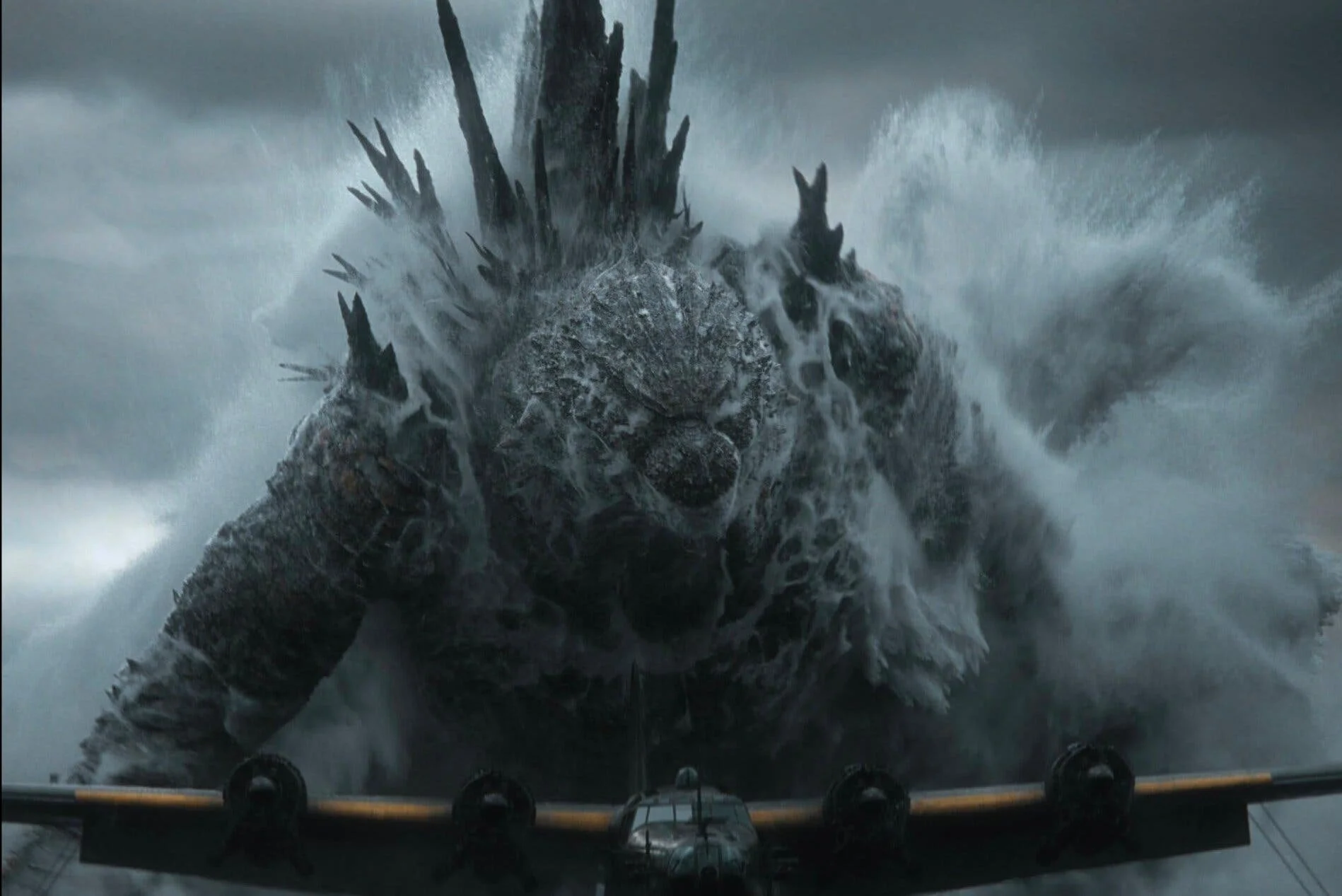
This is mostly due to the utter craftsmanship on display. While the screenwriting quality may have dipped between the first and second film, the technical aspects put the already impressive Minus One to shame. With a broader canvas and a bigger budget, Yamazaki and his incredible team of VFX artists and sound designers, alongside composer Naoki Sato, have crafted a handful of sequences that will go down as some of the best in monster movie history.
One early sequence in particular — a dogfight featuring Ghidorah pursuing Koichi as others try to take the beast down — is an absolute showstopper. Incredible IMAX camerawork combined with convincing CGI and a genuine sense of tension had me gripping the armrests of my seat. It culminates in a frightening evolution of the Ghidorah character and the cheer-worthy reemergence of Godzilla. This stretch is not only the high point of Yamazaki’s directorial work on both films, but also the best-directed sequence in Godzilla movie history.
And even with the aforementioned script issues, Minus Zero still deserves credit alongside its predecessor as one of the few films in the franchise to fulfill the promise of the original 1954 movie, with Godzilla serving as a metaphor for atomic destruction and all that entails. With an R rating under its belt, Minus Zero doesn’t pull any punches when it comes to connecting the atomic bomb and the titular monster, oftentimes intercutting flashbacks of victims in Hiroshima with victims of Godzilla in a way that’s quite disturbing. In turn, it reclaims much of the emotional power lost across seven decades of countless sequels, reboots, and animated series.
Grade: B. Rated R. Now playing at AMC River Hills 10, Carolina Cinemark, and Regal Biltmore Grande.
(Photo: TOHO/GKIDS)