
Boorman and the Devil
Josh McCormack: While William Friedkin's The Exorcist is widely considered one of the greatest horror films of all time, the exact opposite is true of its 1977 sequel, Exorcist II: The Heretic.
That film and its director, John Boorman, are the focus of David Kittredge’s lovingly crafted and very entertaining Boorman and the Devil — a documentary that doesn't necessarily try to convince audiences that the oft-maligned Exorcist II is actually a masterpiece, but does extol the virtues of a sequel that, for better or worse, is the vision of a singular cinematic auteur.
Now, before we get into the film, a little birdie told me that you are something of a hater when it comes to the original Exorcist. While I usually have no time for people who share this opinion — given that the original film is not only one of my favorite horror movies, but also one of my favorite movies of all time — I'm willing to make an exception since I respect you as a film critic and a human being.
So, the floor is yours. Why don't you like The Exorcist, and what were your feelings on Boorman's Exorcist II before checking out this documentary?
Edwin Arnaudin: The gist is that I’ve never found The Exorcist remotely scary — not at home, alone with all the lights turned off; not with a packed house on the big screen; and not with whatever Friedkin added in the Director’s Cut. Demonic possession and exorcism movies rarely do it for me, and while I appreciate the filmmaking craft on display a little more with each viewing, it lacks the terror of Halloween, Psycho, and Boorman’s own Deliverance that keep me returning to those true horror classics.
Despite my lack of love for the original, it’s not a bad movie — but Exorcist II most certainly is. It’s a wild swing by Boorman, a filmmaker whose work I love beyond Deliverance (especially Zardoz, Excalibur, Hope and Glory, and The Tailor of Panama). And while I appreciate him taking such huge risks and being willing to get weird, little of it works.
However, it’s a relief to learn through Kittredge’s film that the end result is far from what Boorman envisioned and that an array of issues and constrictions led to this compromised product. What was your take on Exorcist II heading in to the documentary and did any particular revelations on the sequel’s borderline cursed production make you appreciate Boorman’s intentions or any of his seemingly random decisions?
Josh: I completely agree with you that, no matter how you look at it, Exorcist II is not a successful film. From Richard Burton's zoned-out lead performance to the uncomfortable leering at a then-17-year-old Linda Blair to a convoluted plot that stands in stark contrast to the storytelling precision of William Peter Blatty's original script for The Exorcist, it's no wonder audiences reviled Boorman's sequel nearly 50 years ago.
As you alluded to, however, Exorcist II certainly isn't an anonymous film. And one of the things I really appreciate about Boorman and the Devil is how it highlights the intentionality and craft that went behind even the most ridiculous of sequences. In light of modern sequels and reboots that fail because they are so tediously risk-averse (the Exorcist series itself experienced this recently with David Gordon Green's dreadful The Exorcist: Believer), the doc makes a compelling argument for the virtues of creative failure — which Exorcist II certainly is.
From stunning visuals to groundbreaking technical achievements (STEADICAM BABY!!!!), Exorcist II has moments that stick with the viewer, and I admire how Kittredge gives a platform for Boorman, alongside members of his cast and crew, to pat themselves on the back for some of the great work they achieved in a not-so-great film. It's all put together in a very compelling — if sometimes a little too cute — package, thanks to a combination of talking heads, animated segments, and even a narration from Kittredge himself, which I thought was one of the less successful elements of the film. I think we're in accord on our thoughts about Exorcist II and our admiration for Kittredge's core thesis, but what were your thoughts on the documentary's overall presentation?
Edwin: One of my favorite films of the past decade is De Palma, in which Noah Baumbach and Jake Paltrow sit Brian De Palma down, listen to him discuss each of his movies, and insert footage that complement and illustrate his insights. (I watch it every Sept. 11 — De Palma's birthday.) It's a simple but effective formula, and when Kittredge employs it here to celebrate Boorman's directorial prowess, the documentary feels similarly transcendent.
Kittredge's narration indeed seems out of place, to the extent that I occasionally wondered if he was intentionally trying to mirror Exorcist II's semi-slapdash, hodgepodge chaos. (The animation of Burton being a diva is also somewhat head-scratching.) But the participating cast and crew are so forthcoming in their interviews that they compensate for his distracting contributions. That includes Blair, who exudes a “don’t blame me” air, and Louise Fletcher, who seems resentful about the whole experience but eventually claims to have zero regrets.
However, I was consistently thrown by uncredited co-screenwriter (credited as second unit director and "creative associate”) Rospo Pallenberg, who strikes me as a classic huckster who weaseled his way into the otherwise sound-minded Boorman’s confidence and probably should shoulder more of the blame for how things ended up.

Linda Blair (Photo courtesy of Yellow Veil Pictures)
Josh: Pallenberg certainly provided a lot of laughs in my screening. I love that both Blair and the late, great Fletcher still seem to harbor a grudge toward him after all these years.
Your comparison to De Palma is also spot-on, and there's something kind of beautiful in the moments when Boorman is discussing the magic of cinema, juxtaposed with the images of what is often considered to be not only his worst film but one of the worst films of all time.
Another comp that came to mind during Boorman's interview segments was Alexandre O. Philippe's Leap of Faith documentary from 2020. That film — which focused on Friedkin and the artistic influences that inspired him while directing The Exorcist — played out as something of a living eulogy just before Friedkin's passing. In the final moments of Boorman and the Devil, Kittredge pulls off something similar, giving Boorman a platform to look back on all of his films (from 1965's Having a Wild Weekend to 2014's Queen and Country) and express the love he feels for each of them — even his universally panned sequel. I imagine both Leap of Faith and Boorman and the Devil could make for a great double feature.
However, the two films are also similar in that they weren't as incisive to me as they might be to a general audience member. While there are specific details that I certainly never knew about, many of the anecdotes — particularly those shared by Boorman and Blair — were things I already had some familiarity with. That's more of a personal nitpick from an overly invested Exorcist fanboy, but it did keep me from finding the film quite as revelatory as other critics have.
Edwin: That’s certainly a risk with documentaries, books, etc., about topics one knows well. I often hear comparable criticism from friends who love a band, then see, for example, Jim Jarmusch’s Gimme Danger or Todd Haynes’ The Velvet Underground and are disappointed that the films only provide a surface level look at the artists and their work.
It’s a tricky situation for a filmmaker where (at least one hopes) they want to be accessible yet also insightful without being overly esoteric. That’s especially difficult within a traditional feature film runtime, which is why I enjoy book-length, multi-chapter interviews with filmmakers (e.g. Matt Zoller Seitz’s The Wes Anderson Collection; Mark Salisbury’s Burton on Burton) and am glad Rebecca Miller was able to go long with Mr. Scorsese and present a larger, well-rounded take on a fairly famous subject.
Would a similar docu-series approach have given Kittredge a chance to delve deeper on various topics and veer off into more nerdy tangents? Definitely, though I also doubt there’s a market for that project beyond niche viewers like us and it probably would have landed on Shudder or some other bullshit. That Boorman and The Devil recently played on 30 U.S. screens (including Raleigh and Charlotte) is a legitimate accomplishment and I wish it well. It gets a strong B-plus from me.
Josh: While I would most certainly binge an eight-hour docuseries version of Boorman and the Devil, I completely understand that I would probably be one of the few. Despite my personal wishes for even deeper insights, I'm still really impressed by what Kittredge was able to pull off here. Not only does it gather together so many members of Exorcist II's cast and crew, but it also includes great insights from various filmmakers (Mike Flanagan, Karyn Kusama) and film critics (Bilge Ebiri, Stephanie Zacharek) who help showcase the film's continued legacy as a cult object.
There's so much behind-the-scenes material on beloved classics throughout cinema's history, and yet I'm continuously drawn to the stories behind great failures. At its best, Boorman and the Devil elicited the same emotions in me that books like Greg Sestero's The Disaster Artist or Max Evry's A Masterpiece in Disarray have in recent years. It uses a film that the broader culture has deemed unworthy of recognition and miraculously finds a way to weave it into a narrative that celebrates singular artists. Because of this, I'll also be giving Boorman and the Devil a B-plus.
Grade: B-plus. Not rated but with adult themes and language. Available starting Sept. 22 on VOD.
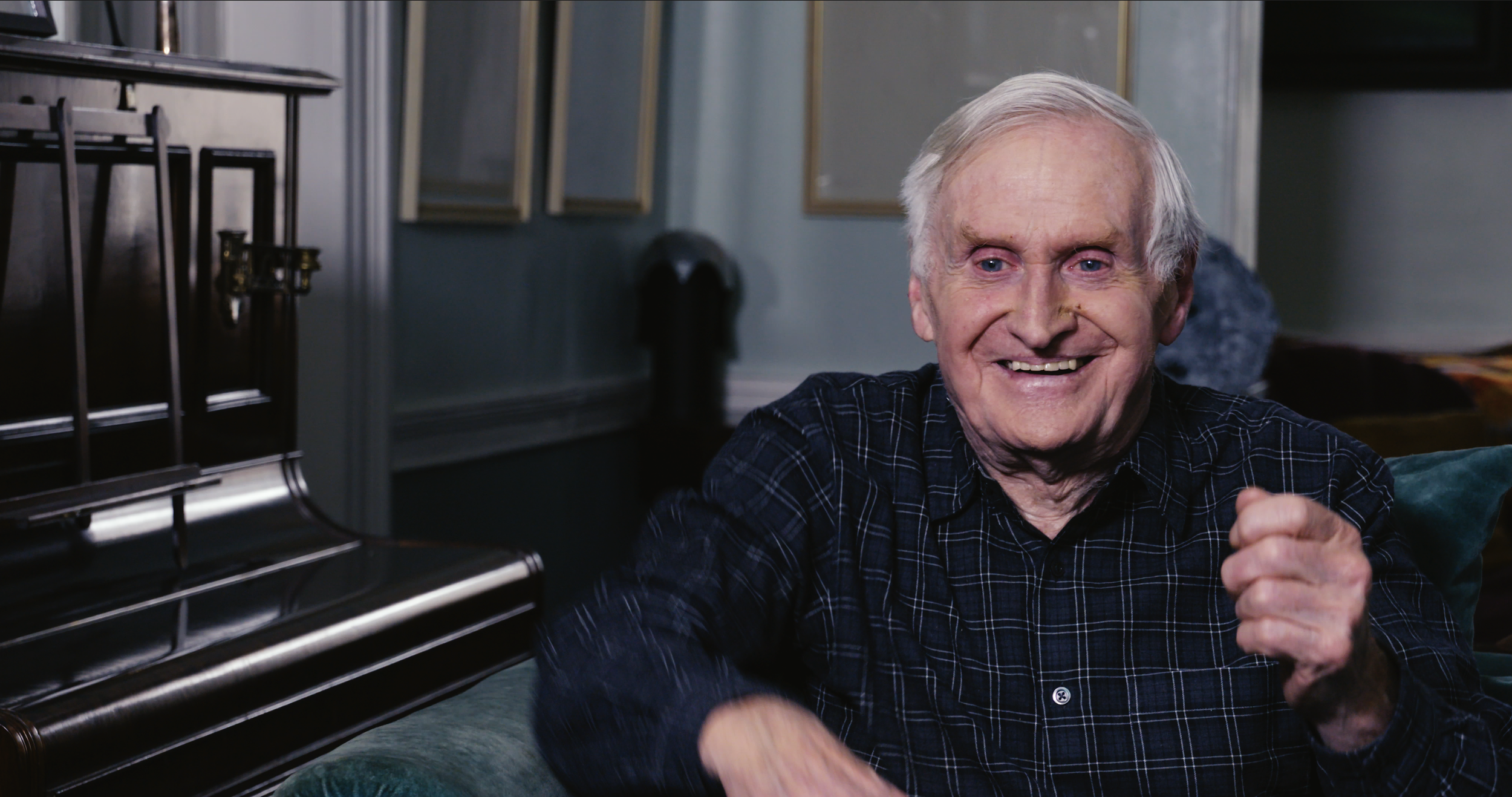
(Photo of John Boorman courtesy of Yellow Veil Pictures)