
The Dog Stars
Edwin Arnaudin: While I was drawn to The Dog Stars primarily for its director (Ridley Scott) and cast (which includes Jacob Elordi, Margaret Qualley, Josh Brolin, Guy Pearce, and Allison Janney), you’ve actually read Peter Heller’s 2012 source novel.
What are your general thoughts on the book and did it seem like material that would translate well to the screen?
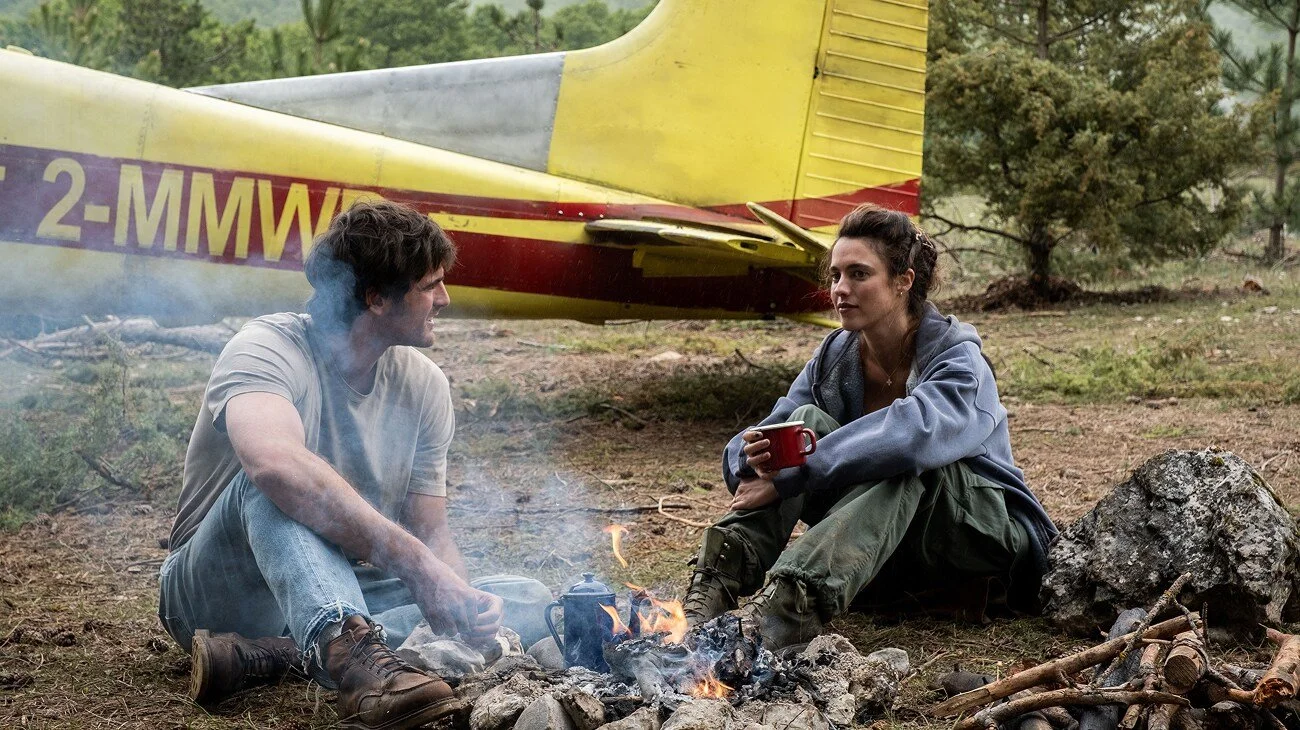
Bruce Steele: Heller has a fresh, character-driven vision of post-apocalyptic life in Colorado that keeps action sequences to just the minimum needed to move forward the story of mechanic and small-plane pilot Hig (Elordi) and weapons expert Bangley (Brolin), who live at a small airport they've turned into a well-guarded compound. That said, I was looking forward to a movie adaptation that stripped away some of Heller's tiresome navel-gazing and improved the balance between the characters' inner lives and the dangers of the world around them.
But while the screenplay by Mark L. Smith (Twisters, The Revenant) and Christopher Wilkinson does eliminate Hig's endless interior monologues, it also tosses out Heller's distinctly pastoral rendering of life after a virulent flu has wiped out more than 99% of humanity. But before I say more about that, I'd like to know where you'd place The Dog Stars in the pantheon of post-apocalyptic movies.
Edwin: Not very high. In a year where the excellent 28 Years Later: The Bone Temple expands on the already rich universe set forth by Danny Boyle’s 28 Days Later (2002) nearly a quarter century ago, this vision barely registers. It’s not a completely worthless portrait of the future — I don’t recall propeller planes in past plague-ravaged stories, just helicopters in the likes of Day of the Dead (1985) — but it's a bit lacking in its world-building and developing its various threats.
The tantalizing nuggets that are there aren’t developed to engaging ends. Hig’s trips to desolate downtown Denver and the nearby house he shared with his wife Melissa (British actor Sai Bennett) raise more questions than provide answers. We also never learn how he teamed up with Bangley, where their equipment came from, etc.
And don’t get me started on the plot contrivances that occur once Hig decides he’s ready to explore — or do, but after you expand a bit more on The Dog Stars as an adaptation.
Bruce: Interestingly, the novel that Heller's most reminded me of in world-building was The Martian, which Ridley Scott also adapted, into a much-more successful film, in 2015. Both novels take great pains to explain how their protagonists manage their limited resources to survive a desperate situation. But while The Martian movie does a great job revealing astronaut Mark's ingenuity and meticulous conservation, The Dog Stars has Hig and Bangley pouring precious gasoline on corpses to incinerate them — in a world where no more gasoline can be made, and the men's existence is contingent upon its rationing. It's just stupid. (Notably, in the novel, the bodies of those who attempt to invade the compound are turned into human jerky to feed Hig's dog, Jasper. Creepy but smart.)
I want to hear your thoughts on the big set pieces that we get once Hig flies off to check out a faint radio signal he hears from a distant airport, but first let me put these developments in the context of Heller's novel. In Heller's world, humans are lucky to find even a few allies, and managing the loneliness is a central theme. Even the homicidal raiders who challenge Hig and Bangley are — consistent with Heller's world — limited in number and resources. Scott's movie, by contrast, tears holes into Heller's world through which come marching some over-the-top post-apocalyptic tropes from A Boy and His Dog (1975), The Road Warrior (1981), and The Postman (1997). It's jarring, and I think that's why you're questioning the world-building. Did these big set pieces work for you as entertainment?
Edwin: They pretty much all arrive so suddenly and with such massive tonal swings that it’s tough to know what to do with them. I get that our heroes have to be ready for anything and everything at a moment’s notice and that there’s not necessarily a ton of warning (though Bangley’s infrared sensors help), but these set pieces feel a bit too convenient — action for action’s sake. Bangley is wisely adamant about Hig not letting his guard down, and when he does, bad things happen. It might not have made for gripping filmmaking, but a little more of the daily grind on their compound, stressing the boredom of keeping watch on days/nights when no would-be invaders cross onto the property, could have fleshed out their existence.
The loneliness you note makes sense in this world, which is why it’s a bit far-fetched that Hig just so happens to experience plane engine trouble right next to the homestead of Pops (Pearce) and his daughter Cima (Qualley). (I still think her name is Zima and that she was named after the carbonated alcoholic beverage from the ’90s. Let me have this fantasy, please and thank you.) That Cima happens to be super attractive, single, and attracted to the also very attractive Hig also elicited some eyerolls from me.
On that note, it’s again convenient that Bangley faces what has to be their compound’s biggest threat yet once Hig leaves, and that Pops and Cima likewise have their security upended while Hig is in their company. Then there’s everything that happens at Grand Junction, Hig’s would-be paradise that he’s determined to find. I was reminded of World War Z (2013), in which Brad Pitt’s character visits places that have been impervious to zombie attacks until he visits. Is Hig similarly an agent of chaos? Or is this just bad writing?
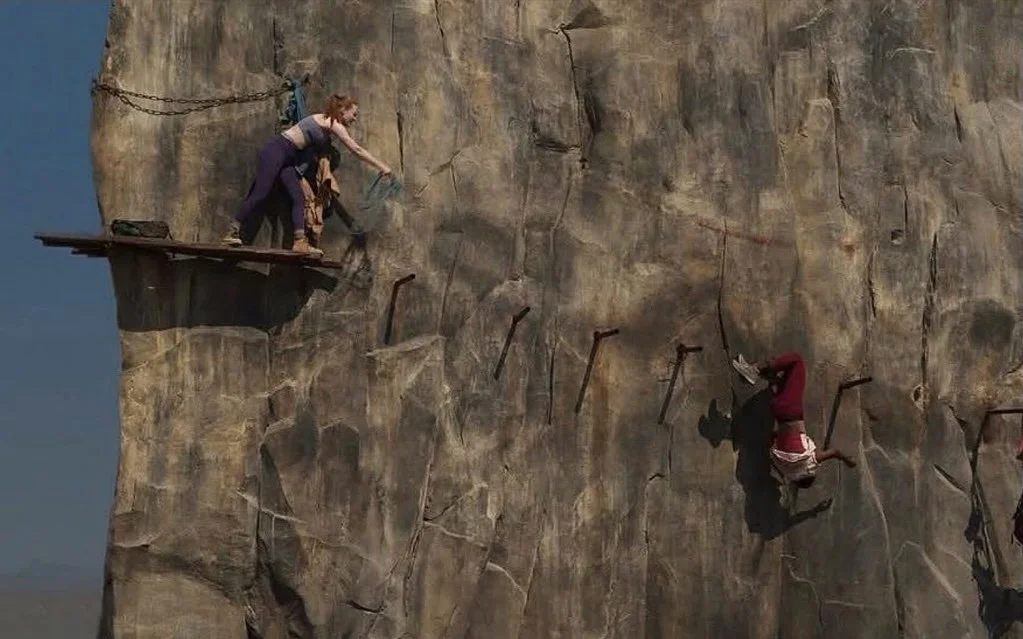
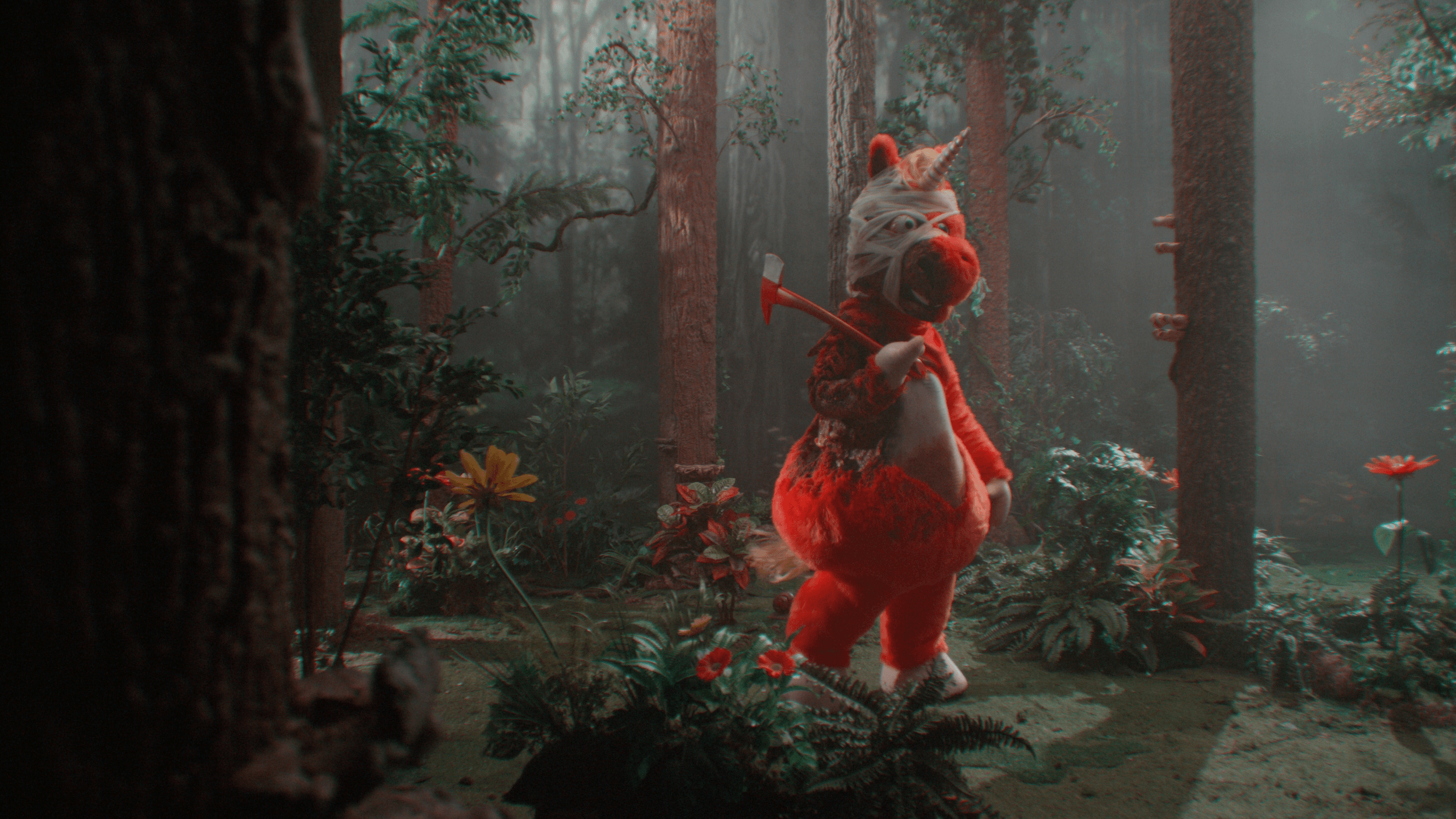
Bruce: A little of both. It's a classic case of filmmakers acquiring a coherent literary property, then not trusting the material. And yes, the coincidences do pile up. But the raid on Pops' and Cima's ranch is more cinematic than the threat Heller poses: Global warming is drying up their creek and their crops. Not as cinematic as painted thugs on horses. Ditto Bangley's battle and the Grand Junction sequence, all supersized for the big screen. I did wonder about Janney's casting before seeing the film, since the character of Darlene in the novel, while fascinating, is seen much more briefly. Little did I know that Darlene had been promoted to mad dictator. And no, that's not a spoiler, since the casting of Sam Spruell as her deputy, in full maniac face from the get-go, signals the lurking evil.
But enough about the film's deviations from the novel. Its main problem, as you point out, is that it doesn't work as a movie, with its undeveloped plot threads (who's burning Denver?), sloppy exposition (why is there an unsullied community of Mennonites led by Benedict Wong's Aaron not far from Hig's airport?), sketchy characters (what's Bangley's story? Or Aaron's?), and tonal inconsistencies. The stellar cast members are appealing because they have long-proven screen charisma (Broslin, Pearce, Janney) or because, as you noted, they're just naturally attractive, but not because their characters draw us into their lives. Take away the big battle scenes, and this film could have been shot for half the money and been twice as interesting, a kind of The Martian for the post-apocalyptic genre. I give it a C.
Edwin: Scott doesn’t always deliver — remember Exodus: Gods and Kings (2014)? (If so, maybe consider an appointment with Eternal Sunshine of the Spotless Mind’s Lacuna, Inc.) — but his typical blend of crisp cinematography and pop storytelling keeps The Dog Stars entertaining enough to ward off boredom. The natural scenery is stunning, the performances are pretty solid across the ensemble (Brolin and Pearce trying to out-gruff each other is fun), and the hope that the questions you raised will be answered generally sustains viewer engagement.
But when they aren’t answered and a New Normal is established with our surviving players, it’s easy to feel a bit cheated by the whole experience. Instead, we’re left with those handful of wild tonal swings — none bigger than the Grand Junction stretch, easily the film’s most ridiculous inclusion — and confusion about just who thought this project was a good idea. I echo your C.
Overall Grade: C. Rated R. Now playing at AMC River Hills 10, Carolina Cinemark, and Regal Biltmore Grande.
(Photo: Fabio Lovino, 20th Century Studios)